Unstructured Tabletop Shuffle · Fisher–Yates 78-Card Deck
Random Tarot Card Generator
Pull one to six plates with our free random tarot card shuffle—built on all seventy-eight 1909 Rider–Waite–Smith illustrations. Use this tarot card generator for pure intuitive study, creative prompts, or spontaneous clarifying draws.
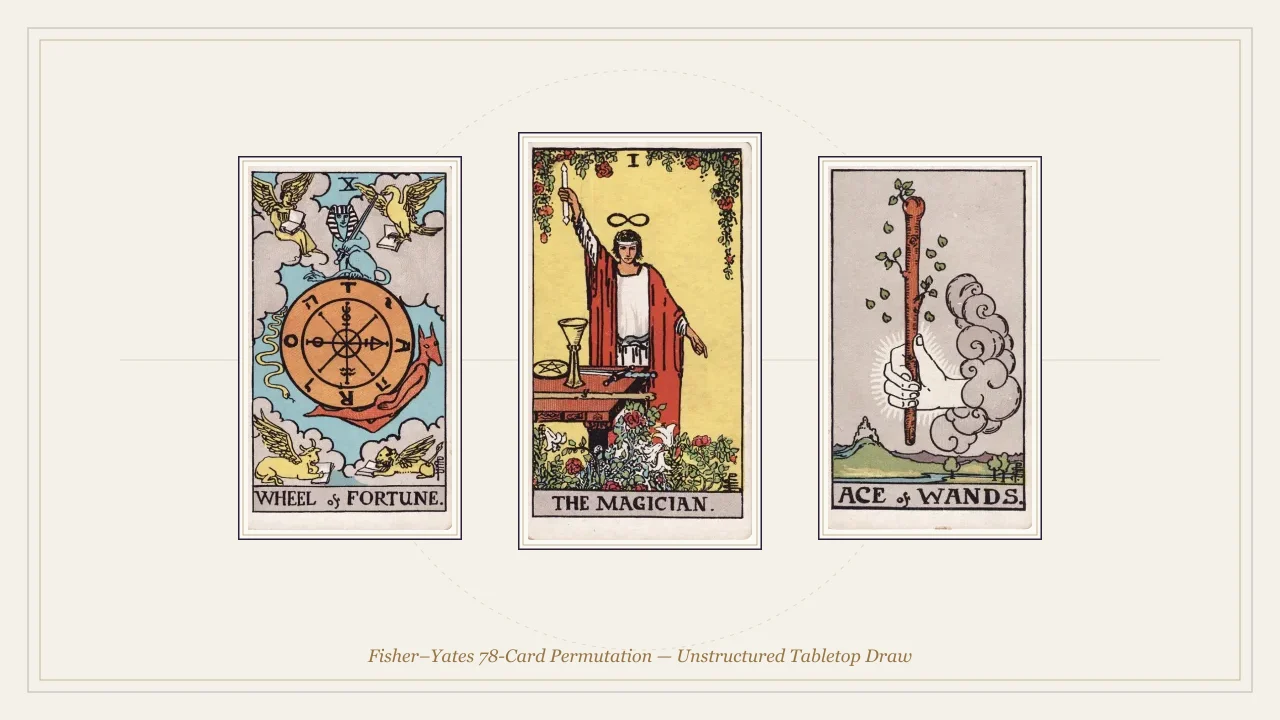
Plate III — Unstructured tabletop draw across Major and Minor Arcana suits.
True Deck Permutation
Why a Honest Random Tarot Card Pull Matters for Practice
Many basic widgets only rotate through the twenty-two Major Arcana or repeat popular cards. Our tarot card generator shuffles the entire seventy-eight-card deck without replacement—meaning once you draw Wheel of Fortune into your first slot, the remaining seventy-seven plates stay in exact physical deck proportion across Wands, Cups, Swords, and Pentacles.
Whether you are memorizing Pamela Colman Smith’s visual cues, breaking writer’s block through archetypal storytelling, or testing your own intuition before reading our commentary, a clean random tarot card table gives you quiet space to look first. When you want structured slot positions instead, explore our Tarot Online spreads or binary Yes or No Tarot.
Learn All 78 Plates
Pull 1 or 2 random tarot cards, name the element and visual details aloud, then tap the plate to verify traditional upright and reversed meanings.
Story & Character Arcs
Novelists and screenwriters draw 3 random cards—Protagonist, Conflict, Turning Point—to unlock unexpected psychological tension.
Companion to Physical Decks
Away from your home deck? Keep Reversals enabled for realistic tabletop odds and pull a quick clarifying card anywhere.
Open Reflection
Turn 3 cards in Waterfall mode without any pre-written question and notice which image catches your eye first.
Reading Pairs & Three-Card Combinations Without a Fixed Layout
Once your plates lie face-up on the linen cloth, resist jumping straight to memorized dictionary lines. Start by scanning the elemental weather across the row: a cluster of Cups signals emotional processing, Wands points toward creative spark and movement, Swords reveals mental framing or honest boundary work, and Pentacles brings attention back to steady craft, health, and everyday stewardship.
Next, look at gaze and direction inside Pamela Colman Smith’s 1909 illustrations. Characters turning toward one another often hint at mutual openness, while figures facing away invite quiet distance or inner integration. Reversed plates—occurring naturally at a measured tabletop ratio—simply mark where energy is working inwardly or asking for slower pacing before outer action.
Study Individual Plates in the 78-Card Library
View all 78 meanings →Random Tarot Card Generator — FAQ
How does this random tarot card generator shuffle the deck?
Every shuffle runs an unbiased Fisher–Yates permutation across all 78 cards of the 1909 Rider–Waite–Smith deck directly in your browser. Each position in the deck has an equal 1-in-78 probability before you draw, with optional 22-card Major Arcana filtering and natural upright or reversed orientation.
What is the difference between a random tarot card pull and a structured spread?
A structured spread assigns fixed meanings to each slot—such as Past, Present, and Future—whereas a random tarot card pull leaves the canvas open. Writers, tarot students, and intuitive readers often prefer unstructured pulls when studying symbolism, journaling freely, or pulling a spontaneous clarifier.
What does "Waterfall turn" do in the tarot card generator?
Enabling Waterfall turn places each chosen card face-down on the linen cloth until your full count (1 to 6 cards) is selected, then flips every plate over in a paced sequence—mirroring how a tabletop reader lays out a spread before turning the story.
Can I turn my random tarot cards into a full AI reading?
Yes. You can study the upright or reversed keywords of each random tarot card on your own first, and whenever you want deeper synthesis, click "Open Connected Reading" to pass your exact drawn cards to Clara, Rowan, Soren, or Celeste without reshuffling.
Is pulling random tarot cards completely free?
Yes. Shuffling the 78-card deck, pulling 1 to 6 random tarot cards, toggling reversals or Major-only mode, and reading traditional Rider–Waite notes is completely free with no sign-up required.