Binary Polarity · 1 or 3 Cards · 1909 Rider–Waite Deck
Yes or No Tarot
Hold a clear binary choice in mind for an instant yes or no tarot check. Turn one Rider–Waite plate for a direct yes no tarot verdict, or draw three cards when timing and unspoken conditions shape your tarot yes no answer.
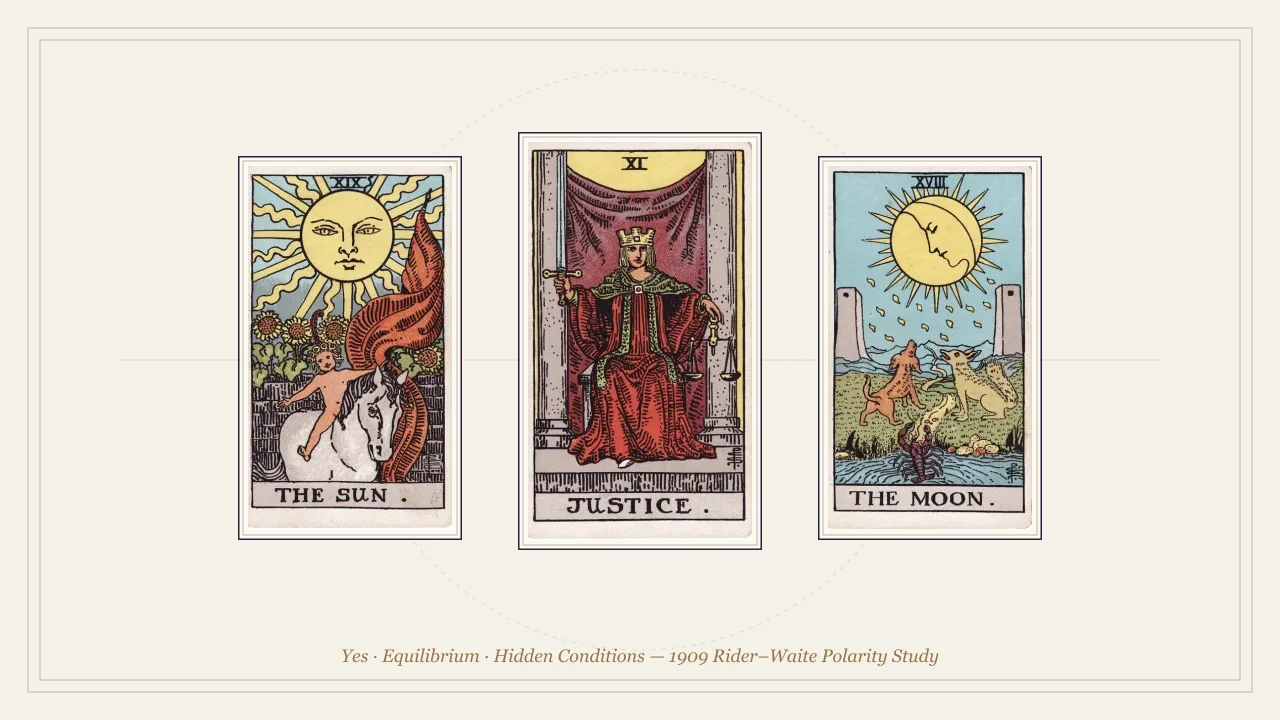
Plate II — Affirmation (The Sun), Equilibrium (Justice), and Unseen Conditions (The Moon).
Polarity & Nuance
How Traditional Yes or No Tarot Reads Beyond a Coin Flip
A coin toss gives a sterile fifty-fifty outcome with zero explanation of why. A well-crafted yes or no tarot draw works differently: every plate in Pamela Colman Smith’s seventy-eight-card deck pairs a directional answer with a concrete condition. Drawing The Chariot says Yes—provided you hold firm boundaries and steer both reins; drawing Four of Swords counsels Not Yet until rest restores clear judgment.
Our yes no tarot engine honors both upright and reversed dignities across all twenty-two Major Arcana and fifty-six Minor Arcana suits. When a decision carries emotional or professional nuance, you can step seamlessly from a binary verdict into a full Tarot Online three-card spread or pull a Daily Tarot card the next morning.
Solar, Abundant & Constructive
Cards such as The Sun, The Star, The Empress, Ace of Wands, Three of Cups, and Nine of Pentacles carry strong forward vitality and open doors when drawn upright.
Course-Correction & Boundaries
Cards such as The Tower, Three of Swords, Five of Pentacles, and Ten of Swords act as honest guardrails—warning against forcing an agreement or ignoring red flags.
Timing & Unfinished Variables
The High Priestess, The Hanged Man, Two of Pentacles, and Seven of Cups indicate that your own next conversation—not fixed fate—will tip the scale.
How to Frame Clear Binary Questions Before Turning a Card
The single most common mistake during a quick draw is asking two competing questions inside one sentence, or asking about an open-ended timeline such as “forever.” Because each Rider–Waite plate reflects present momentum rather than rigid destiny, anchoring your prompt to a realistic window—this month, this quarter, or this upcoming conversation—yields far sharper insight.
“Should I accept the Berlin offer or stay at my current company?” — Two competing choices blur a binary polarity.
“Does accepting the Berlin offer this quarter align with my growth?” — One clear choice, one clear timeframe.
78-Card Polarity Index
Yes or No Tarot — Frequently Asked Questions
How does Yes or No Tarot weigh a Yes, No, or Maybe answer?
Each of the 78 Rider–Waite–Smith cards carries a traditional elemental polarity. Solar and constructive plates such as The Sun, The Star, The World, Ace of Cups, and Six of Wands lean clearly Yes; disruptive or cautionary plates such as The Tower, Five of Swords, or Ten of Wands lean No or counsel delay; reflective thresholds such as The High Priestess, The Hanged Man, and Two of Swords signal Maybe until hidden facts surface. Reversals temper that polarity, and 3-card Yes No Tarot balances Supporting Factors, Core Answer, and Hidden Conditions together.
When should I choose 1-Card versus 3-Card Tarot Yes No?
Choose 1 Card for a clean ten-second binary gut check when your question is direct and immediate. Switch to 3 Cards when timing, another person’s unspoken hesitation, or practical conditions matter—three cards reveal why an answer leans Yes, No, or Maybe rather than leaving you with a bare single word.
How should I phrase a question for Yes or No Tarot?
Frame one concrete choice within a realistic timeframe rather than stacking two alternatives with "or". Instead of asking "Should I move to London or stay in New York?", ask "Does moving to London this autumn support my growth?" Concrete binary phrasing produces far clearer tarot yes no symbolism.
Do I have to type my question into the box?
No. You can hold your binary question privately in mind and turn the card immediately, or write it down if you want Clara, Rowan, Soren, or Celeste to tailor the written interpretation to your exact situation.
What should I do if my Yes or No Tarot spread lands on Maybe?
A Maybe verdict is never an evasion—in Rider–Waite practice, cards like The Moon, Seven of Cups, or Temperance appear when a crucial conversation has not yet happened or when rushing would force a premature outcome. Click "Continue in Full Reading" to open a three-card spread and inspect what shifts the balance.